

"I keep hearing about interesting innovations and new technologies entering dentistry, but I'm not a technical person." You don't need a serious technical background to benefit from automation, innovation, and AI. You simply need to understand what is possible, what is realistic, and how to get help. Let's first focus on the area that frees up the most staff hours — automation.
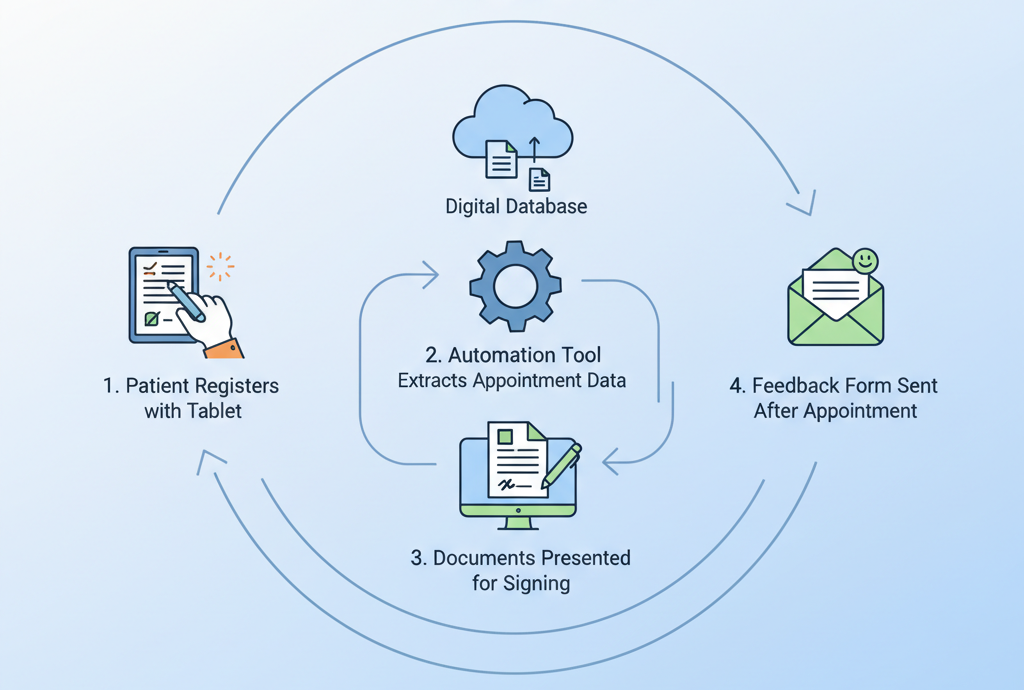
What does "automation" actually mean?
When I say "automation", I don't mean replacing staff with robots, learning to code, or buying expensive corporate software. I mean connecting the tools you already use and that are free — like Google Calendar, Gmail, Docs, and others — so they talk to each other. I mean eliminating repetitive manual tasks such as copying information from hand-filled patient forms into documents on the computer. I mean creating consistent, reliable processes that run the same way every time — contributing to predictability and dependability. That's all there is to it — nothing mystical, just logic and connectivity.
What can and cannot be automated?
Good candidates for automation are tasks that happen the same way every time: repetitive data entry, sending routine emails, creating documents from templates, moving information from one place to another, organising and storing data. In a dental practice, this means things like converting registration form data into a patient record, automatic post-appointment emails, review and rating requests after a visit, appointment reminders, and messages about upcoming check-up appointments.
Poor candidates for automation are anything requiring judgement or empathy: handling unique patient situations, complex decision-making, building patient relationships, clinical assessments, dealing with complaints. The rule is simple: if a task requires human judgement or compassion, keep it human. If it is mechanical and repetitive — automate it. Never automate care and patient interaction, only document work.

What are the actual costs and investment?
Let's talk in concrete numbers. For software, you can use Google's products — Sheets, Forms, Docs, Calendar, and others. You can also use open-source automation tools for signing and various functionalities. The cost of Google products is 0 BGN/month. Monthly fees for open-source software are also 0 BGN/month.
For the initial setup, you have two paths. You can hire someone to configure it, or do it yourself. In one case you pay for the service; in the other, the cost is your time. Ongoing maintenance is minimal — around one to two hours per quarter to update templates, update the software, or adjust the automation as new requirements arise.
If the automation saves 3–4 hours of staff time per week at 15–20 BGN per man-hour, you save 2,500–4,000 BGN per year in labour alone. Plus added value for patients and a system that can provide data for business process analysis.
What does the process actually look like?
Building it typically takes a day or two, depending on the complexity of the process. It is then thoroughly tested. The next step is training the staff — how to work with the new tools, what to expect, and what to watch out for. This is followed by launching the automation in the real environment and monitoring how it performs.
Should you do it yourself or hire help?
This decision depends entirely on your individual situation. You can always do it yourself. If you have an interest in new technologies and can dedicate free time to building these processes — that option is perfectly valid. If you are aiming for fast results and are driven primarily by business needs, a desire for best practices, need it to work perfectly from day one, and don't have the free time — hire a consultant. A good consultant makes you independent, not dependent.